
What Is E-commerce SEO?
E-commerce SEO explained: product vs category focus, technical dependencies, and organic revenue rol
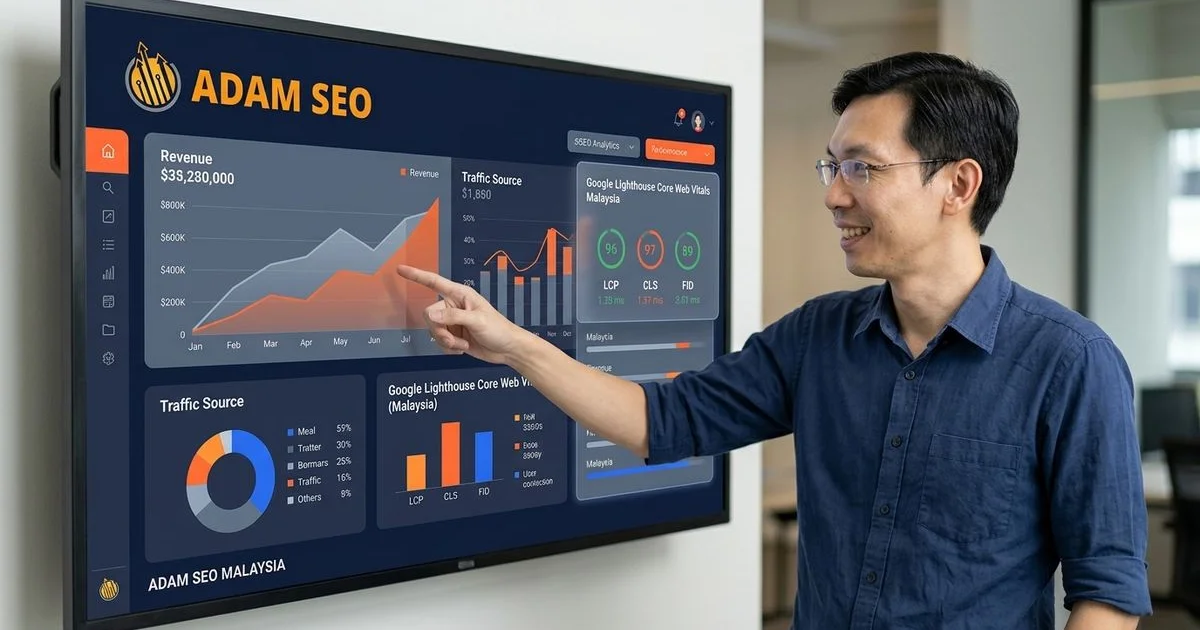
We notice many founders struggle to connect organic search rankings with actual sales. You are probably researching what is ecommerce seo because your ad costs are cutting too deeply into profit margins. Learn more in our E-commerce SEO guide.
This challenge is common among growing brands today.
Our team sees this shift happening rapidly across Kuala Lumpur, Penang, and Johor Bahru. E-commerce SEO is the targeted process of making your online store visible to high-intent buyers on search engines.
It turns product pages into unpaid, 24/7 sales representatives.
Let us walk through exactly how this strategy works.
You will learn the technical requirements and see practical ways to measure real revenue impact.
Product vs category SEO
You need to know the clear distinction between ranking a specific item and ranking an entire product group. E-commerce SEO starts with defining these two separate revenue outcomes.
Product pages capture buyers ready to purchase right now. Category pages attract shoppers who are still comparing options.
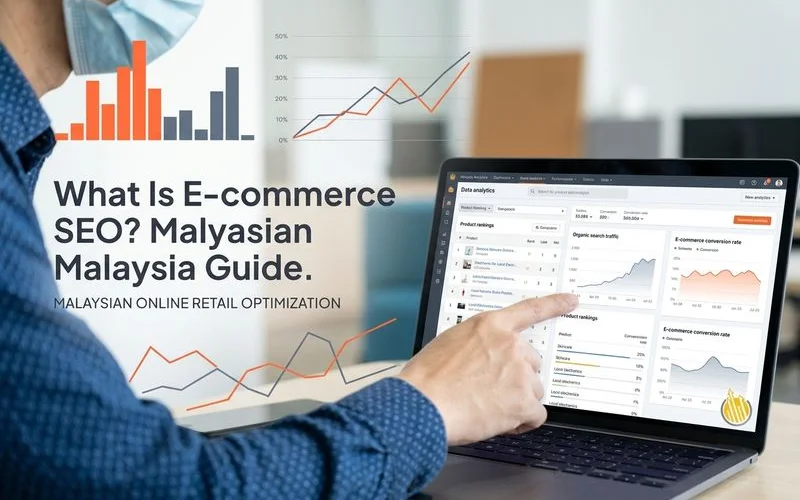
We built Adam SEO’s 4-Stage 9-Step framework to educate store owners on this exact dynamic. Founded in 2011 by SEO veteran Adam Yong, our agency operates on a simple premise. Search engine rankings alone are meaningless without tangible business results.
Key takeaway
Rankings only matter when they connect to qualified leads and measurable revenue.
Our team uses Ahrefs and SEMrush data to track these separate funnels. You will see what moves leads and sales instead of just monitoring basic keyword positions.
Recent 2026 industry data from Anchor Group shows a massive 27.6% click-through rate for the top organic search spot. Grabbing that position requires matching the user’s exact search intent.
A broad search for “running shoes” demands a category page. A specific search for “Nike Pegasus 40 size 10” needs a product page.
Technical dependencies For related context, see E-commerce Platform Migration SEO: Protecting Your Rankings.
Your website infrastructure directly dictates your organic search success. Technical dependencies form the hidden foundation of any profitable online store.
Search engines simply will not rank a slow or broken site. We constantly see Malaysian SMEs losing sales due to poor platform optimization.
Mobile shoppers account for nearly 75% of e-commerce traffic locally in 2026. A minor one-second delay in mobile page load speed reduces conversions by 7%. You must prioritize mobile responsiveness above all else.
| Factor | Typical approach | Adam SEO approach |
|---|---|---|
| Reporting | Keyword counts | Revenue and conversion metrics |
| Timeline | Vague promises | Month 1 quick wins, months 4-8 revenue impact |
| Strategy | Traffic-only | Integrated CRO with SEO |
Our developers frequently optimize stores built on both Shopify and WooCommerce. Shopify offers excellent baseline speeds and built-in security features out of the box.
WooCommerce provides deeper customization for local payment gateways like Razorpay Curlec for FPX and DuitNow QR. Both platforms require strict attention to technical SEO to perform well.
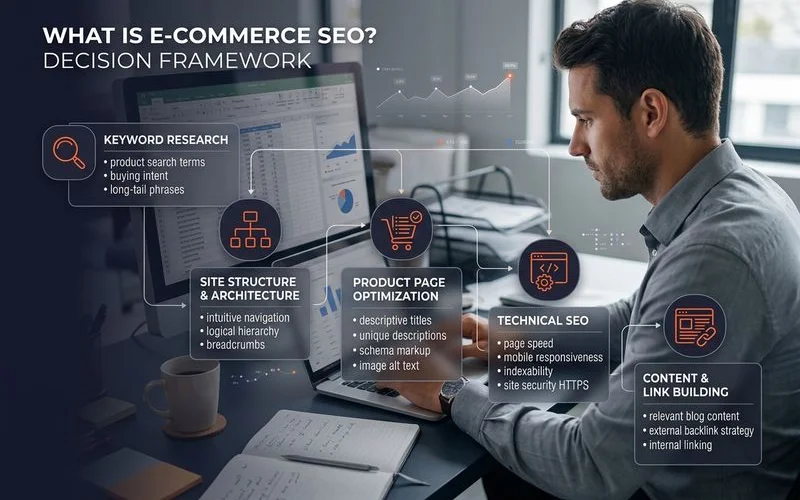
Indexing and Crawl Budget
Search engine bots need clear pathways to read your extensive product catalogs. Complex navigation structures often trap these bots and waste your crawl budget.
We recommend flattening your site architecture so every product is reachable within three clicks. Proper URL structures help index your pages faster.
Duplicate content is another massive technical hurdle for online retailers. Product filters and sorting options automatically generate hundreds of identical URLs.
Implementing proper canonical tags tells search engines which specific page version to rank. Here are three technical checks you must run monthly:
- Test mobile loading speeds using Google PageSpeed Insights.
- Review your XML sitemap for broken links or redirected product pages.
- Ensure all out-of-stock items have clear 301 redirects to related categories.
ROI tie-in for stores
Connecting your search visibility to actual bank deposits is non-negotiable. ROI tie-in for stores separates a profitable campaign from an expensive hobby.
You need a system that proves the financial value of your organic traffic. We track every single click to see how it affects your bottom line.
Organic search traffic routinely converts at 2% to 4%, which often outpaces social media channels. High-intent searchers already know what they want. Your goal is simply being the most relevant option they find.
Our reporting focuses heavily on metrics like Customer Acquisition Cost (CAC) and Average Order Value (AOV). E-commerce SEO generally breaks even within six to nine months.
The return on investment then compounds significantly by year two and year three.
Tracking the Buyer Journey
Modern analytics tools let us follow a user from their first search to their final checkout. We set up custom tracking to monitor Add to Cart rates and checkout abandonment.
This granular data highlights exactly where you are losing potential revenue. Understanding these touchpoints reveals the true value of your SEO investment:
- Assisted Conversions: A user finds a blog guide, leaves, and returns via a direct search to buy.
- Customer Lifetime Value: Organic buyers frequently return without costing you ongoing ad spend.
- Profit Margins: Unpaid search clicks dramatically reduce your blended acquisition costs over time.
You can reinvest those saved advertising dollars directly into product development or better shipping options.
Malaysian e-commerce context
The digital retail landscape here is growing at an incredible pace. Malaysia recorded e-commerce revenue exceeding RM1.18 trillion recently according to the Department of Statistics Malaysia.
This massive growth is fueled by expanding 5G coverage and high mobile adoption. Local buyers expect fast, smooth, and localized online experiences.
We understand the unique search habits of the Malaysian consumer. You must optimize for three distinct local factors:
- Mixed-language queries blending Bahasa Melayu and English.
- Regional slang like “kasut lari best” instead of formal terms.
- High-intent searches tied to specific local payment methods.
Our strategies account for major regional shopping events like Hari Raya and the 11.11 singles sale. Preparing your site architecture months in advance ensures you capture peak seasonal traffic.
When you are ready to act, request a free discovery audit. We will review technical issues, keyword gaps, and competitor positioning before any custom proposal.
Ready for a revenue-focused plan? Get My Free SEO Audit
Related Guides
E-commerce Platform Migration SEO: Protecting Your Rankings
301 redirect mapping, staging audits, and pre/post-launch checks for Shopify, WooCommerce, and Magen
How Much Does E-commerce SEO Cost in Malaysia?
Catalog size factors, migration project pricing, and retainer fit for Malaysian online stores.
Product Page SEO Essentials for Malaysian Online Stores
Tactical product URL checklist: titles, schema, internal links, image alt text, and conversion align
Shopify vs WooCommerce SEO for Malaysian Stores
SEO tradeoffs between Shopify and WooCommerce: technical flexibility, app ecosystems, and migration
Guide FAQ
Should I start with E-commerce SEO after reading this? ▼
How does What Is E-commerce SEO? relate to hiring an SEO agency? ▼
How does What Is E-commerce SEO? relate to hiring an SEO agency? ▼
Learn more about E-commerce SEO
Get a free discovery audit tailored to your business.
Get My Free SEO Audit